Bespoke Suits in Dubai with Custom Tailoring, Luxury Fabrics & Precision Fit
| Established | 1992, family run across two generations |
| Studio | Office 1229, Tamani Arts Building, Al Asayel Street, Business Bay, Dubai |
| Pattern | Made for each client, with no standard patterns |
| Who makes it | Each suit is tailored by a single artisan |
| Fabric | Luxury fabrics chosen with your tailor, or bring your own |
| Doorstep service | Measurements and consultation at your home or office in Dubai |
| Price guide | Bespoke suits typically AED 1,500 to 2,000, depending on fabric |
| Google rating | 4.9 |
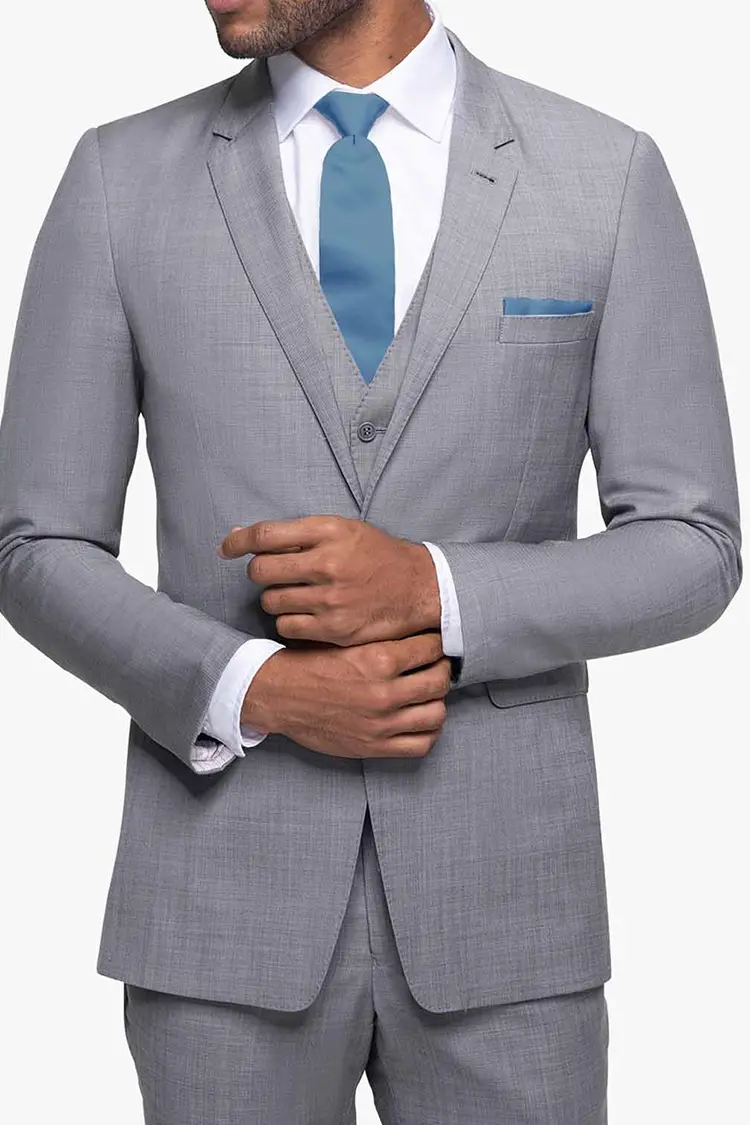
Gray Bespoke Suit
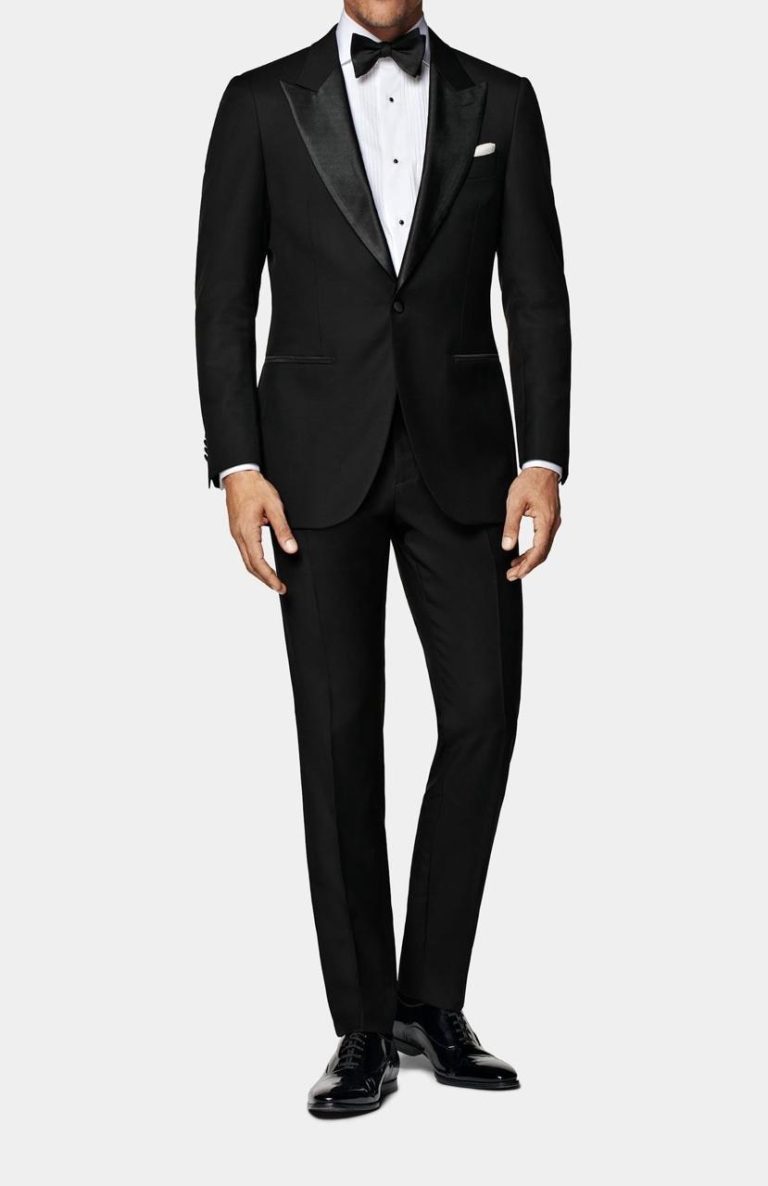
Men's Blue Bespoke Suit
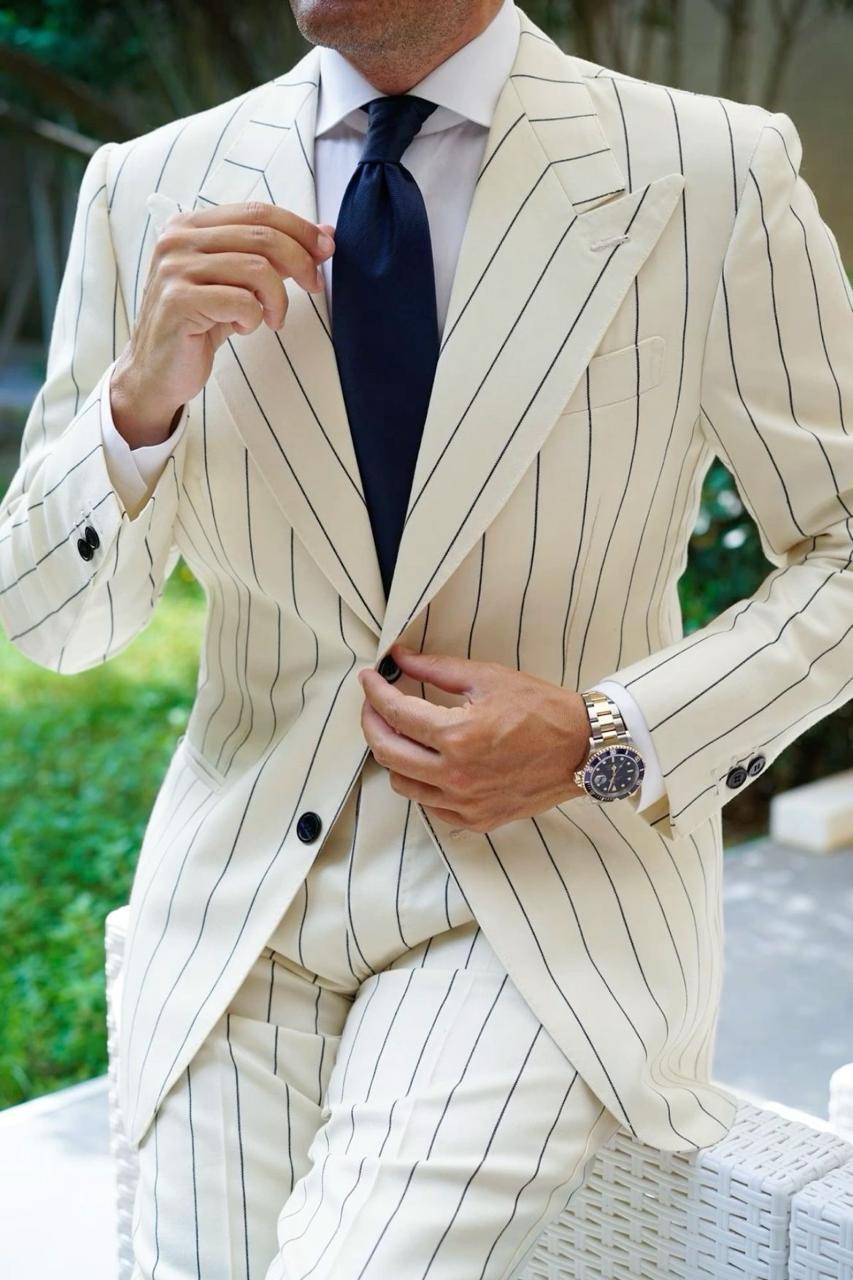
Ascot Suit DiBanGu
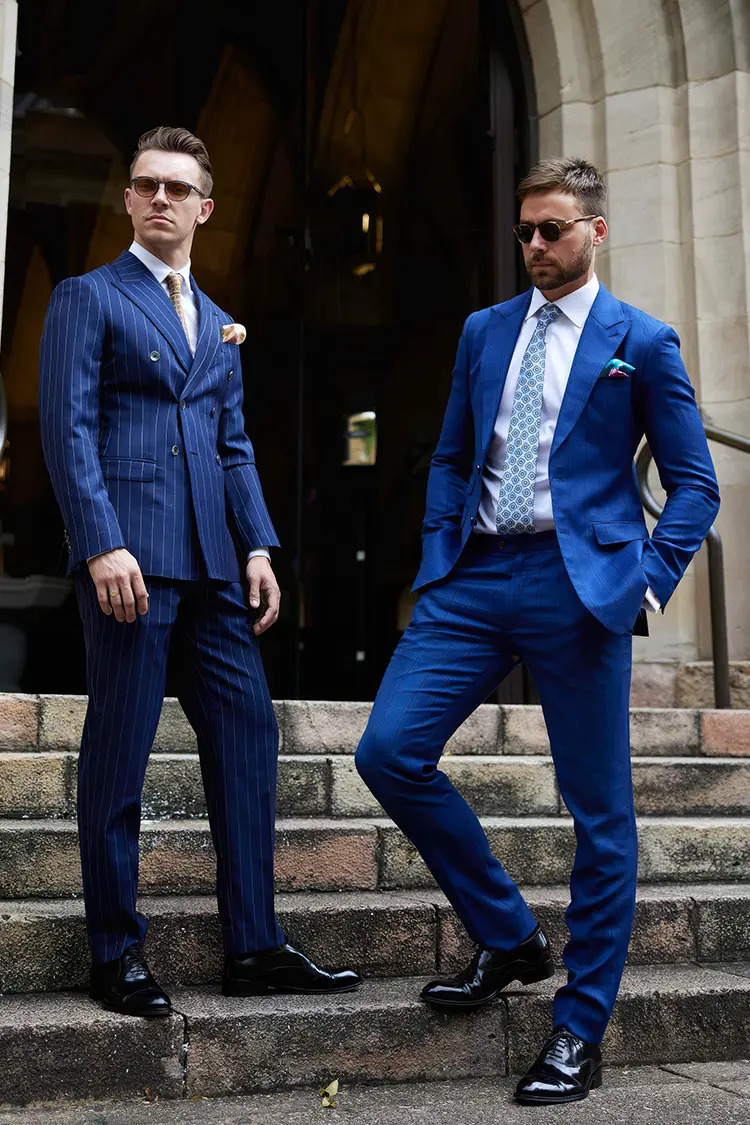
Men's Custom Suits
What Makes a Libas Legacy Suit Bespoke?
A suit is bespoke when its shape comes from your body rather than from a pre-existing size. Four things define true bespoke tailoring: an individual pattern made for your frame, a canvassed jacket that moulds to you over time, fittings on the unfinished suit, and details finished by hand. At Libas Legacy there are no standard patterns, so every suit starts from the first and most important of these.
Individual Pattern
Made-to-measure alters an existing block pattern. Bespoke creates a new paper pattern for your frame alone. Your measurements and posture shape that pattern, and your cloth is cut from it, so the proportions of the jacket and trousers are yours from the first cut rather than adjusted afterward.
Canvas Construction
A traditional bespoke jacket is built on an inner canvas of wool and horsehair rather than glued interlining. The canvas floats between the cloth and the lining, held by hand stitching, so it moves with you and gradually takes the shape of your body. The jacket fits better the more you wear it.
Fittings in Stages
A bespoke suit is tried on while it can still be changed. Traditionally this starts with a basted fitting, where the jacket is held together with temporary tacking stitches, followed by a forward fitting and a final check. Each stage sets the hang, balance and comfort on your body rather than on paper.
Hand-Finished Details
The finishing shows the hand. Look for buttonholes worked by hand, fine pick-stitching along the lapel and pocket edges, and sleeve buttons that actually open.
Bespoke, Custom-Made and Tailored Suits: What Do the Terms Mean?
“Custom suit” and “tailored suit” are broad terms for clothing made or adjusted around an individual client. They do not always describe the same method. A made-to-measure suit normally starts from an existing base pattern that is modified to your measurements. A bespoke suit starts from a pattern created for the wearer. Clients looking for custom-made suits in Dubai receive the bespoke process described on this page: measurements and posture shape the pattern before any cloth is cut.
A ready-made suit sits furthest from the wearer. Its shoulder, chest and balance are set in factory production. Some alterations are possible later, but the garment was never drafted around your body, so changes are limited to what the existing shape allows. The differences between bespoke and ready-made suits show most clearly in the shoulders and balance, the areas hardest to change once a garment is sewn.
Ready-made suit | Made-to-measure suit | Libas Legacy bespoke suit | |
Starting point | Standard retail size | Existing base pattern, adjusted | Pattern made from your measurements |
Shoulders and chest | Set in factory production | Adjusted within the base pattern’s shape | Shaped to your slope, posture and build |
Cloth | Chosen by the brand | Chosen from a range | Luxury fabric chosen with your tailor, or your own |
Design details | As supplied | Selected options | Lapels, pockets, vents, lining, buttons and trousers chosen with your tailor |
Every commission is part of the wider bespoke tailoring service at Libas Legacy, where each suit is tailored by a single artisan, so the person who cut your cloth understands the adjustments made when you try it on.
Tailored Suits Built Around Your Proportions
A jacket can match your chest measurement and still sit badly. That happens when the shoulder slope, posture or arm position of the wearer differ from the pattern, which is why well-balanced tailored suits depend on more than a tape measure reading.
Posture changes how a jacket balances front to back: a forward stance makes the hem swing open, an upright one pulls it closed. Most people carry one shoulder slightly lower than the other, and accounting for it lets the collar sit flat and the shoulders look even. The angle at which your arms hang decides where the sleeve is set and whether it falls cleanly or twists. Athletic clients with broad shoulders and a narrow waist are poorly served by standard sizes, because a pattern made for them can size chest and waist independently.
The trousers follow the same logic. Rise decides where they sit, seat and thigh decide how they move when you sit and walk, and the break decides how they meet your shoes. Our guide to how a suit should fit explains what each of these points looks like on a finished garment.
How We Create Your Bespoke Suit
Consultation
We begin by talking about how and where you will wear the suit: how often, in what setting and by what date. That conversation shapes every later decision about cloth, structure and styling. Consultations take place at our Business Bay studio or, through our doorstep service, at your home or office.
Measurements and Body Balance
Your tailor takes your measurements and notes posture, shoulder slope and stance. These notes matter as much as the numbers.
Your Pattern
Your measurements become a pattern made for you. It is built from your figures rather than resized from a standard pattern, which is why the fitting refines the suit rather than rescuing it.
Fabric and Design
You choose your cloth from our luxury fabrics, along with the design details of the suit. If you already have a cloth you want to use, you are welcome to bring it.
Cutting and Making
Your cloth is cut from your pattern and your suit is tailored by a single artisan.
Fitting
You try the suit on before you take it home. Your tailor checks how it sits and makes any adjustments it needs.
Collection
The finished suit is pressed and ready to wear. If something needs attention later, bring it back to the studio, where our garment alteration service handles changes to clothing.
How We Refine the Fit
When you try your suit on, you stand, sit, raise your arms and move naturally while the tailor checks it on your body. The collar should sit against your shirt collar rather than lift away from the neck. The shoulder line should look even, without dents or ridges. Front and back hems should hang level when you stand normally, and the jacket should close without pulling and follow your shape without gripping. Sleeves should hang without twisting and show the right amount of shirt cuff. On the trousers, the rise should feel comfortable seated, the leg line should be clean and the break should meet the shoe as you prefer.
Checking these points on the body, rather than on paper, is what turns good measurements into a suit that fits.
The Jacket and Trousers Must Work Together
A bespoke suit is not a fitted jacket with matching trousers. It is one silhouette. Jacket length, waist shaping and shoulder expression set the upper body; trouser rise, taper and break set the lower half. If the two work against each other, the suit looks unbalanced even when every individual measurement is correct.
A longer jacket, for example, often works better with a sufficiently high trouser rise and a clean trouser line, so the legs do not look shortened. The right balance still depends on your build and the look you want, which is why the tailored trousers of your suit are cut alongside the jacket.
The shirt completes the picture. Collar height, sleeve length and cuff exposure all affect how the jacket reads, making a custom shirt cut to the same proportions a natural partner to a bespoke suit.
Understanding Bespoke Suit Construction
Most of what makes a suit good sits inside it. The outer cloth is supported by an internal structure that shapes the chest, holds the roll of the lapel and carries the shoulder. That structure decides how the jacket drapes over your body, how it recovers after a day’s wear and how long it keeps its shape.
A full canvas, described above, runs through the whole jacket front. A half canvas uses the same principle through the chest and lapels only, while a fused jacket relies on glued interlining, which is quicker to make but stiffer and less able to adapt to your body.
The right build depends on the cloth and how you will wear the suit. A lightweight cloth for regular warm-weather wear usually suits a softer, lighter construction than a heavier cloth for a formal evening. The shoulder can be more defined or soft and natural, and the roll and width of the lapel should follow the proportions of your jacket. Linings matter too: a full lining helps a jacket slide on and off, while a partial lining keeps a summer jacket lighter. Talk these choices through with your tailor at your consultation.
Luxury Suit Fabrics for Dubai
Libas Legacy is a luxury tailor, and we treat fabric as seriously as the tailoring itself. We source luxury fabrics, because cloth decides how a suit feels in Dubai: whether the jacket breathes outdoors, holds its shape in an air-conditioned office and recovers from creasing after a car journey.
Property | What it affects | What to consider for Dubai |
Weight | Coolness versus structure | Lighter cloths for suits worn regularly, with enough body to hold shape |
Weave | Breathability and sharpness | Open weaves for heat; denser weaves where a crisper look matters |
Composition | Crease recovery, coolness and sheen | Wool breathes and recovers well; linen is coolest but creases; cotton sits between; silk blends suit evening wear |
Use | Durability | Frequent wear needs crease recovery; occasional suits can favour texture or colour |
For Dubai, lightweight wools and linen blends are the natural starting point. Lightweight suiting in roughly the 220 to 260 grams per metre range is commonly chosen for warm-weather tailoring, because it balances low weight with enough body for structure. The weight, weave and composition of your suiting fabric together decide how the jacket drapes and breathes; our guide to fabrics for Dubai’s climate covers this in more detail. If you already own a cloth, bring it to your consultation.
Personalizing Your Bespoke Suit
Once your silhouette is established, the design details are chosen around it. A suit can be a two-piece, or a three-piece with a matching waistcoat, which changes both the structure and styling of the outfit; you can see examples of how to style a three-piece suit. Closures can be single or double breasted. Lapels can be notch, peak or shawl, with the width balanced to your shoulders. Pockets can be flap, jetted or patch; vents single, double or none; linings in the colour and pattern you like; and buttons chosen to suit the cloth. A monogram stitched inside the jacket is a classic finishing touch. On the trousers, you choose flat front or pleats, belt loops or side adjusters, a plain hem or turn-ups, and your preferred break.
Some choices only change appearance, such as lining colour. Others, like lapel width, button position and trouser pleats, change how your proportions read, so it is worth discussing those with your tailor.
Bespoke Suits for Different Uses
Professional wear. A suit worn several times a week needs cloth with good crease recovery, durable construction and a restrained silhouette, and those needs are covered in more depth in our business suits guidance.
Weddings. A bespoke wedding suit also has to account for the venue, dress code, event date and how the groom wants to coordinate with the wider wedding party. Those decisions are addressed through our wedding tailoring service.
Men’s wardrobes. For men building a coordinated wardrobe, a bespoke suit can establish the jacket and trouser proportions that also guide future shirts and tailored separates through our men’s bespoke tailoring. The same principles of measurement and fitting apply to clients commissioning suits through our women’s tailoring.
Bespoke Suit Prices in Dubai
Bespoke prices in Dubai vary widely. Fully hand-constructed suits in prestige imported European cloth often start around AED 4,000 and can pass AED 8,500, with the price rising with the cloth and the amount of hand construction. Bespoke suits at Libas Legacy typically cost AED 1,500 to 2,000, depending on the fabric, which brings a pattern made for you and luxury fabric within reach. The final price depends on the specification of the garment.
Price factor | How it affects the quotation |
Cloth | Fibre, weight and origin of the fabric you choose |
Configuration | Adding a waistcoat or a second pair of trousers |
Design complexity | Double-breasted cuts, special pockets or detailed linings |
Your own fabric | Supplying the cloth yourself changes the quotation |
Your quotation and delivery date are confirmed at your consultation before any cloth is cut, so you know both before you commit. Our breakdown of bespoke suit costs in Dubai explains these pricing factors in more detail.
How Long a Bespoke Suit Takes
Traditional bespoke, with full hand construction and several fittings, commonly takes 4 to 6 weeks, because each stage of hand work and fitting takes time. Your own delivery date is agreed at your consultation. It depends on whether your chosen cloth is in stock, how complex the design is and how many adjustments your fitting shows are needed. If you have a fixed deadline, such as a wedding or trip, tell us at the start so the work can be planned around it.
The Latest Styles & Trends
From shirts to formal wear, we customize everything imaginable! Your bespoke suit can follow a classic cut or the latest styles and trends, from slimmer modern silhouettes and softer shoulders to double-breasted jackets and wider-leg trousers. Your tailor will help you choose a style that suits your proportions as well as the moment.
Why Choose Libas Legacy for Your Bespoke Suit
Libas Legacy has been tailoring in Dubai since 1992, when MD. Azad founded the house. Today it is carried forward by his son, keeping the family tradition going into a second generation. That history matters in practice: tailoring judgement grows through years of fitting different bodies, postures and cloths, and a dropped shoulder or forward stance is something our tailors have seen many times before.
We are a luxury tailor, and it shows in the details you can check for yourself. We source luxury fabric for our suits, each suit is tailored by a single artisan, and there are no standard patterns: yours is made for your body.
Our doorstep service brings measurements and consultations to your home or office, and your quotation and delivery date are agreed before any cloth is cut.
Independent guides agree.
Libas Legacy is featured as a Best Tailor in Dubai and listed among the Top 10 Best Tailors in Dubai, and our clients rate us 4.9 on Google. You are welcome to visit the Business Bay studio, see the fabrics and meet your tailor before you commit.
Decades of Experience from Our Bespoke Tailors in Dubai
Trust in a Dubai tailor should come from visible evidence.
Libas Legacy combines an established business history with a physical showroom, direct consultations, real tailoring work and independently published customer experiences.
EXCELLENT Based on 137 reviews
 Posted on Google
 Nafil MHe fix my cloth perfectly Service amazingPosted on Google
 MarcfhonziGreat customer services! Recommended!Posted on Google
 hafiz faisalTrusted tailor for custom fitsand elegant desgin.Posted on Google
 Ab sattar ChandioThey are awesome 💯Posted on Google
 Lindy StaExcellent service , quick and professional. I highly recommendPosted on Google
 Daryoush AshrafpourAmazing Service & Work! Thank you!Posted on Google
 Usman Ali AliOne of the best tailoring experiences I’ve had. The suit stitching was high quality, and it looked very elegant when I wore it. Totally worth it.Verified by TrustindexTrustindex verified badge is the Universal Symbol of Trust. Only the greatest companies can get the verified badge who has a review score above 4.5, based on customer reviews over the past 12 months. Read more
Frequently Asked Questions
Is a custom-made suit the same as a bespoke suit?
Not always. “Custom-made” is a broad term that can include made-to-measure suits adapted from an existing pattern. A bespoke suit starts from a pattern made for the wearer, which is how Libas Legacy makes its bespoke suits.
Can I start my bespoke suit consultation online?
You can start by message. Send your requirements and any reference images to us on WhatsApp before your appointment. Because a bespoke suit is cut from your own measurements, measuring and fitting then take place in person, at our studio or at your home or office.
What should I bring to my first consultation?
Nothing is required. A suit whose fit you like, reference images of a style you want, or your event date all help us understand what you are looking for.
Can I show you a photo of a suit I like?
Yes. Reference photos are a useful way to communicate lapel shape, silhouette and pocket style. The suit is still cut for your proportions and cloth, so the idea is adapted to you rather than copied.
Can I order a second pair of trousers?
A second pair in the same cloth is a common way to extend the life of a suit, since trousers wear faster than jackets. Ask about it at your consultation.
Can I use my own fabric?
Yes. Bring it to your consultation and your tailor will check it is suitable for a jacket and trousers.
Visit Libas Legacy in Business Bay, Dubai
Libas Legacy Office 1229, Tamani Arts Building, Al Asayel Street, Business Bay, Dubai, United Arab Emirates
Phone and WhatsApp: +971 55 918 5480 · Email: info@libaslegacy.com
Visit the studio to discuss your suit, have your measurements taken and compare fabrics, or use our doorstep service and have a tailor come to your home or office.