
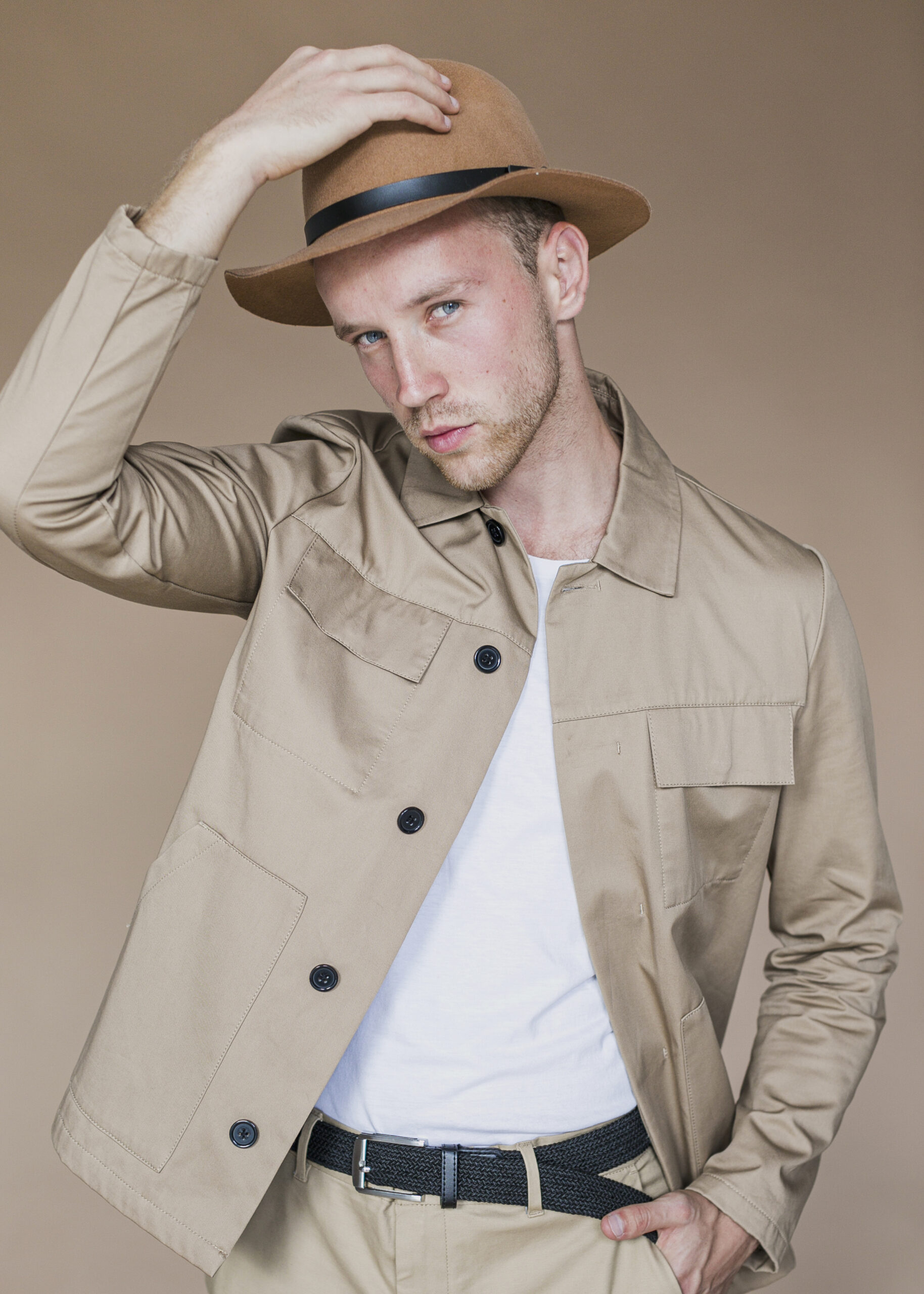
Safari Suits for Men in Dubai, Tailored by Experts Since 1992
A safari suit is a lightweight, utility-inspired jacket with patch pockets, worn with trousers cut from the same cloth. Libas Legacy tailors safari suits for men from its Business Bay studio, with the pocket layout, belt, collar, fabric and trouser shape decided around your body and where you plan to wear it. Every safari suit is cut for you and stitched by hand, by a family tailoring house founded in Dubai in 1992.
Established 1992 · Business Bay, Dubai · Stitched by Hand · Home and Office Measurements
Book a Safari Suit Consultation · WhatsApp +971 55 918 5480
Safari Suits at a Glance
What you get | A safari jacket and coordinated trousers, cut from your measurements |
How it is made | Cut for you and stitched by hand |
Design | Pockets, belt, collar, sleeves and colour decided with you at consultation |
Fabric | Lightweight, breathable cloths chosen for Dubai’s climate, including linen |
Your own fabric | Welcome |
Price and delivery | Quoted at your consultation, before any cloth is cut |
Where | Business Bay studio, or measurements at your home or office in Dubai |
Products
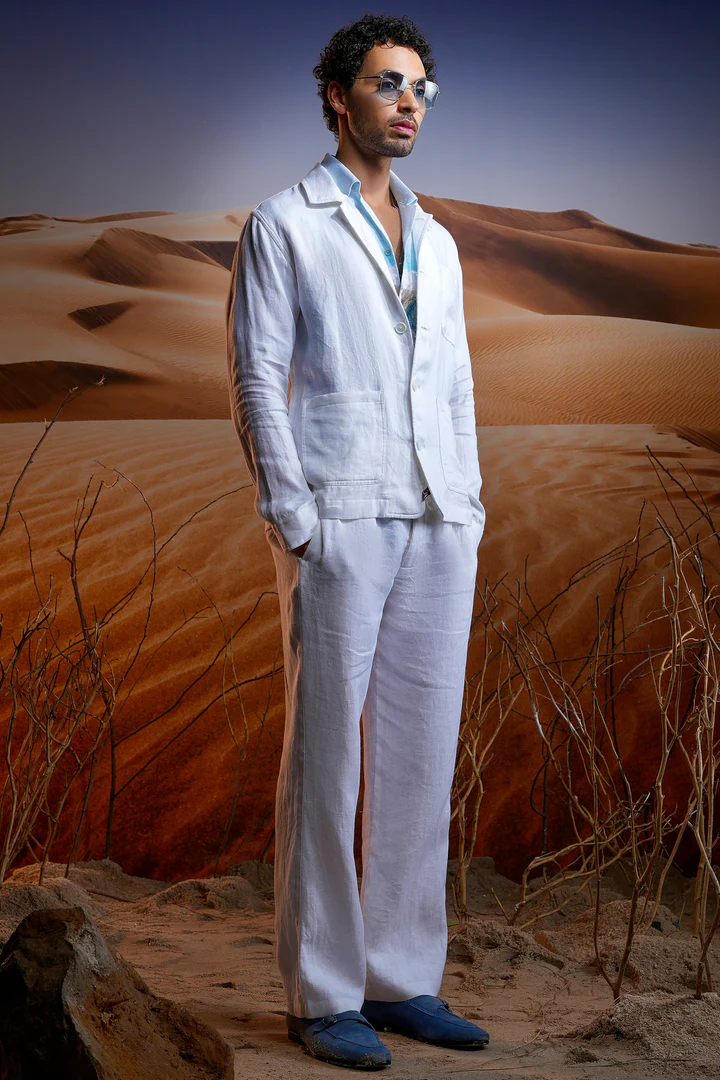
White Herringbone Linen Coord Set
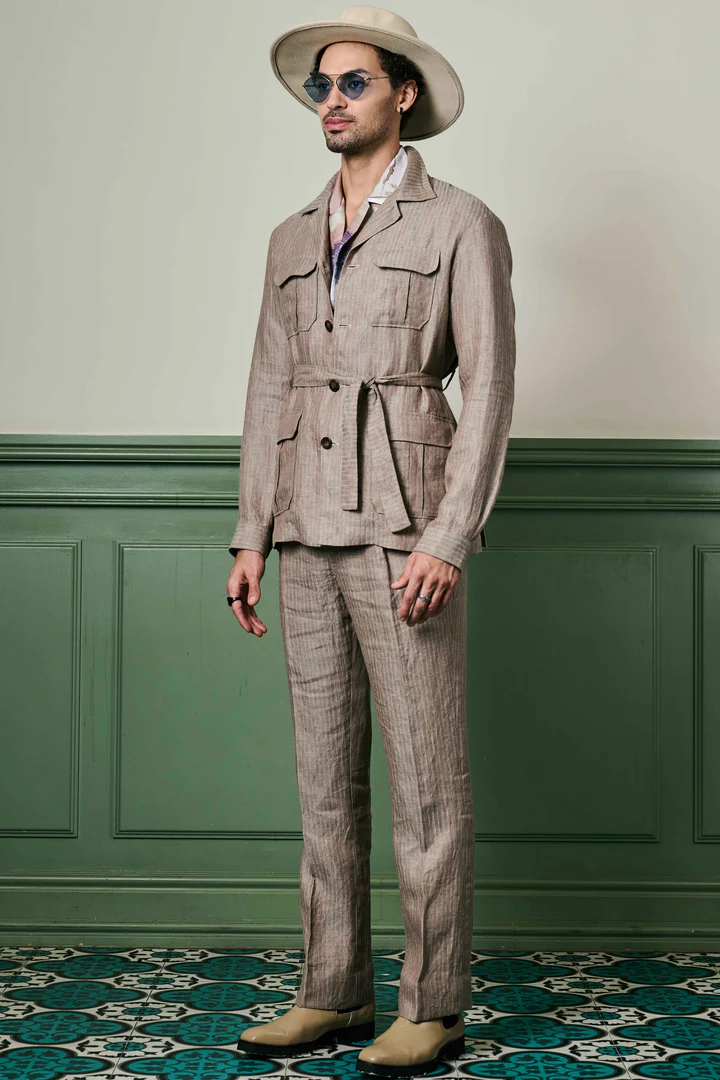
Herringbone Textured Linen Safari Suit
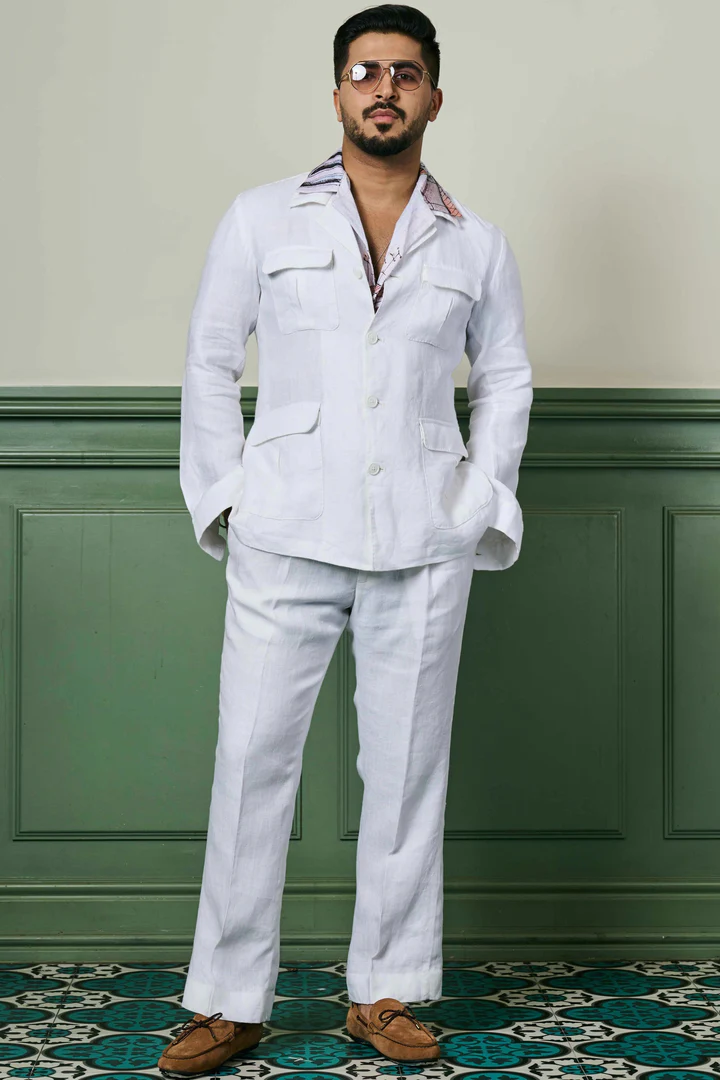
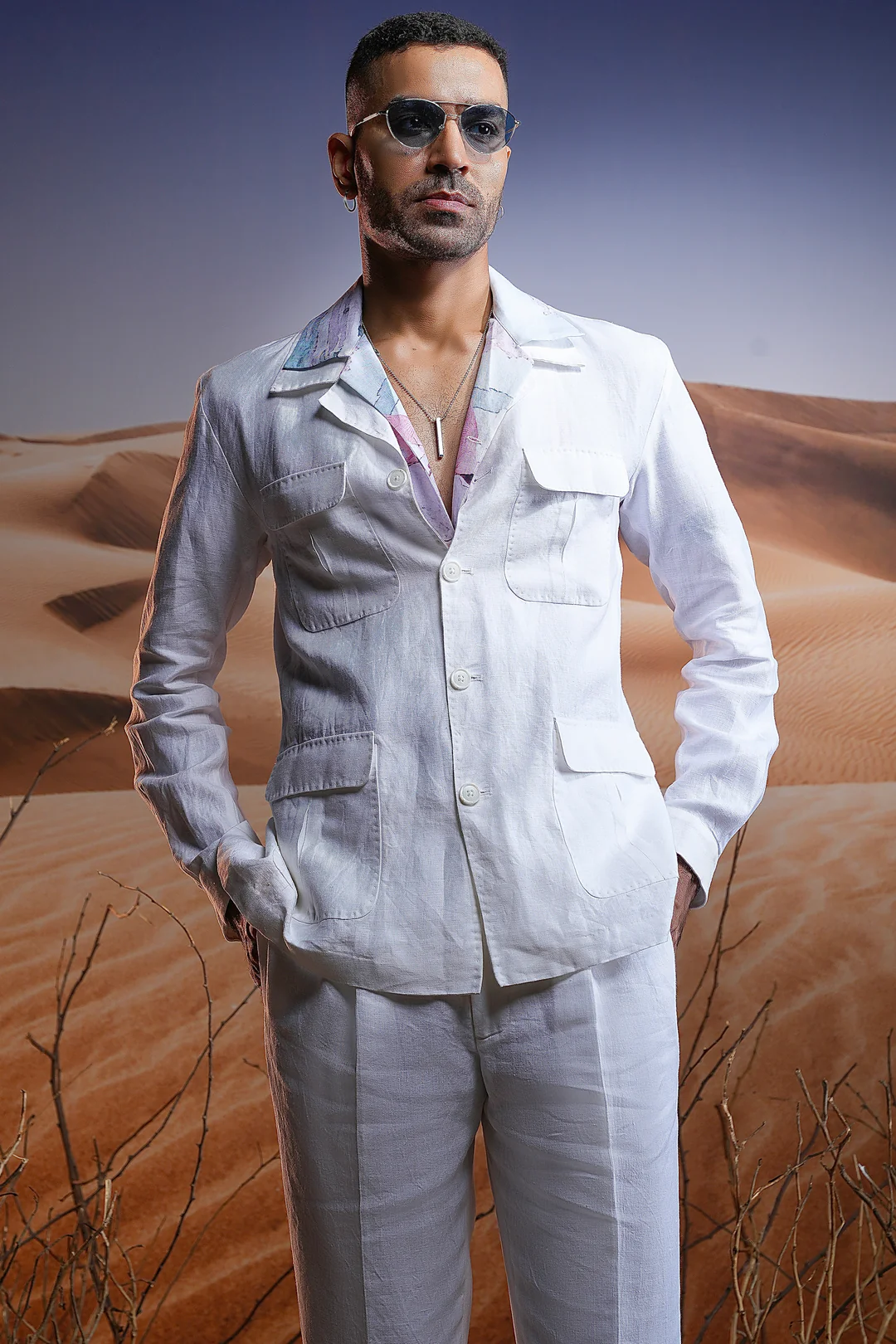
White Linen Safari Suit
White Linen Safari Suit
What Is a Safari Suit?
A safari suit combines a safari jacket with matching trousers. The jacket is the part that gives the outfit its identity. It began as practical clothing for hot climates, so its traditional signs are all functional: large patch pockets for carrying things, a lightweight build that lets air move, a shirt-style or notched collar, and often a belt and shoulder epaulettes.
A safari jacket is that upper garment on its own. A safari suit is the jacket plus coordinated trousers, planned together so the two halves read as one outfit.
Modern safari suits rarely use every historical detail at once. What makes the garment recognisable is the combination: visible utility pockets, a lighter and more relaxed structure than a business suit, and trousers that balance the jacket
Safari Suit or Conventional Suit: Which Do You Need?
Neither is better. They do different jobs.
Safari suit | Conventional suit | |
Jacket character | Utility-inspired, with visible patch pockets | Restrained, with flat or jetted pockets |
Structure | Lighter and more relaxed | More structured through the chest and shoulders |
Signature details | Belt, epaulettes, shirt-style collar (all optional) | Lapels, vents, a clean front |
Suited to | Daytime, travel, relaxed business, warm-weather events | Business, formal occasions, evening wear |
Worn with | Open-neck shirts, knitwear, polos | Shirt and tie, or open collar |
If you need a garment for boardrooms and formal evenings, classic bespoke suiting is usually the better choice. A safari suit earns its place when you want something tailored that still feels at home in heat and relaxed settings.
Pocket Architecture: The Detail That Makes or Breaks a Safari Jacket
A safari jacket carries more visible design on its front than most tailored jackets, so its pockets matter a great deal. Four decisions shape them.
Decision | Common options | What it changes |
Number | Four (two chest, two lower), or a simpler two-pocket layout | Four is classic and bold; two is quieter and more urban |
Construction | Flat patch pockets, or bellows pockets that expand | Flat pockets add less bulk; bellows hold more but project further |
Size | Scaled to the wearer’s torso | Oversized pockets widen the look; very small ones read as decoration |
Placement | Aligned with the chest and hip line | Good placement keeps the front balanced standing and seated |
Pocket placement is one of the clearest places where proportion matters. On a shorter torso, lower pockets set too low can make the jacket look long and the legs short; on a broader frame, wide chest pockets add width where it is not wanted. Because the jacket is cut for you, pocket size and placement can be adjusted to your proportions so the front stays visually balanced.
Pockets also depend on the cloth. A very soft, lightweight linen tends to suit flatter pockets, while a firmer weave supports a deeper pocket without sagging. If you plan to carry a phone or passport in the jacket, mention it at your consultation so the cloth and pocket style can be chosen with that in mind.
A Safari Jacket Cut for Your Frame
Ready-made safari jackets often force a trade-off: the size that fits your chest has sleeves that are too short, and the size with the right sleeves hangs loose everywhere else. Tailoring removes that choice, because the shoulder, chest, ease and sleeve length are each cut for you rather than taken from one size.
A safari jacket usually sits with a softer, more natural shoulder than a business jacket and enough ease through the chest and waist to move and let air circulate without looking boxy. A belt pulls in the waist and adds definition; an unbelted jacket relies on its cut for shape. Traditional safari jackets are often cut somewhat longer than conventional suit jackets so the lower pockets sit in proportion, although the final length should follow your body and the design you choose.
Jacket Over Trousers: Getting the Two-Piece Balance Right
Trousers are half of a safari suit, and one common reason a safari suit can look unbalanced is trousers that were not planned with the jacket.
A longer safari jacket will often work better with a sufficient trouser rise, so the legs do not look shortened. A fuller, four-pocket jacket can be balanced by a straighter or slightly fuller leg, while a slimmer two-pocket jacket sits comfortably over a gentle taper. For a cleaner, modern look, many men prefer little or no break at the hem, particularly with loafers.
That is why the trousers are cut to balance the safari jacket rather than treated as a separate garment.
Safari Suit Designs and Styles
These are useful starting points for discussing a safari suit design. Each can be adjusted with your tailor.
Classic Safari Suit
Four patch pockets, a belt, a shirt-style collar and often epaulettes, usually in khaki, beige or stone. The most traditional safari suit design for men, with the strongest character.
Modern Safari Suit
Flatter pockets, no epaulettes, a cleaner collar and a slimmer trouser. It reads as a warm-weather tailored suit with safari details.
Relaxed Safari Suit
Soft linen, an unstructured jacket and a straight or fuller trouser. Built for comfort at weekends, on holiday and at daytime social events.
Belted or Unbelted
A belt emphasises the waist and the safari heritage; leaving it off looks more contemporary. Which suits you depends on your build and the look you want.
Cloth for Dubai: Linen, Cotton or Lightweight Wool
Safari suits are often chosen for warm-weather wear, so cloth decides whether they work. The fabric also has to carry pockets, which adds a second test: it needs enough body to hold its shape.
Cloth | Strengths | Trade-offs | Suits |
Linen | Very breathable; natural texture | Creases readily; very soft linens can let pockets sag | Daytime, outdoor events, relaxed styles |
Cotton | Holds shape well; durable; creases less than linen | Usually a little warmer than linen | Everyday wear, travel, classic styles |
Linen blends | Balance airflow with shape | Less textured than pure linen | Frequent wear |
Lightweight wool | Sharp look; recovers well from creasing | More formal; usually costs more | Modern styles, business casual, evening |
A linen blend, or a linen with enough body, can offer a useful balance between airflow and pocket structure. Linen creases as you wear it, which is part of its character. Your tailor will show you the cloths available at your consultation; you can also compare our fabric choices for warm-weather garments or read more on how fabrics perform in Dubai’s heat.
Colour: From Khaki to a Black Safari Suit
Colour | Effect | Where it works |
Khaki, beige, stone | The classic safari look | Daytime, travel, outdoor events |
Cream and white | Light, fresh and bright | Summer daytime, garden events |
Olive | Utilitarian, slightly rugged | Casual and travel |
Navy and grey | Urban and more formal | Business casual, city evenings |
Black | Sharp, modern and dramatic | Evening events, fashion-led looks |
Can a Safari Suit Be Black?
Yes. A black safari suit turns the utility details into something sharper and more formal, suited to evening events and modern styling. For long outdoor daytime wear in Dubai, black can feel less forgiving in direct sun, so the cloth’s weight, weave and airflow become especially important.
Keeping a Safari Suit Modern, Not Costume
Many men like the idea of a safari suit but worry about looking theatrical. Fit matters most: a safari suit that fits your shoulders and sleeves looks deliberate, while a loose one looks borrowed. Editing the details helps too. Choosing two or three safari signatures rather than all of them, such as flat pockets without epaulettes, already reads as contemporary.
Trousers and styling finish the job. A clean leg with little break looks current, while very wide, long trousers can look dated. An open-neck shirt or fine knit and simple loafers let the jacket speak. If a full matching suit feels like too much, the jacket can be worn on its own with contrasting trousers, which also makes it easier to fit into an existing wardrobe.
Where a Safari Suit Works
Business casual and daytime events. Networking lunches, relaxed offices and daytime meetings where a full suit feels heavy. Pair with an open-neck shirt; a custom shirt worn beneath the jacket keeps collar and cuff proportions tidy.
Travel. Pockets for documents and a phone, cloth that breathes, and a jacket that still looks put together off a flight.
Social events. Garden parties, days on the water, and evenings out in the cooler months.
A Wedding Safari Suit
A wedding safari suit can work well for daytime, outdoor, destination or relaxed celebrations, often in cream, white, stone or a soft colour. For formal or evening ceremonies, a conventional suit is usually the safer choice. Check the event dress code first, and for groom-specific decisions see our tailoring around the wedding dress code.
Safari Suits From Our Studio
White herringbone linen safari suit. A herringbone weave generally gives linen a little more texture and body than a plain weave, which helps patch pockets keep their shape while the cloth stays light for warm days.
White linen safari suit. A plain white linen keeps the suit as light and airy as possible, making it a natural choice for daytime and summer events.
How Your Safari Suit Is Made
Consultation. You tell us where you will wear the suit and which safari style you like. Reference photos are welcome, and so is your own fabric.
Measurements. Taken at our Business Bay studio, or at your home or office in Dubai.
Design. Pocket layout, belt, collar, sleeves, colour and trouser shape are decided together, so jacket and trousers are planned as one outfit.
Cutting and stitching. Your suit is cut from your measurements and stitched by hand.
Fitting. You try the suit on before collection, and any adjustments are made so it sits correctly on your body.
Safari Suit Price and Timing
The price of a safari suit depends mainly on the cloth you choose, and also on design details such as the pocket construction and whether the jacket has a belt. Supplying your own fabric is welcome. Your quotation and delivery date are confirmed at your consultation, before any cloth is cut, so you know both before you commit. If you have a travel or event date, mention it when you book. Our guide to tailoring and stitching costs in Dubai explains the factors that shape tailoring prices.
A Family Tailoring House Since 1992
Libas Legacy was founded in Dubai in 1992 by MD. Azad and is now led by his son, carrying the family’s tailoring into its second generation. Every safari suit is cut for the client and stitched by hand, and the studio offers measurements at home or at the office as well as in Business Bay. Libas Legacy is rated 4.9 on Google, and features in Best Trusted Firm’s guide to the Top 10 Best Tailors in Dubai. The live Google review feed below shows current reviews in clients’ own words.
A safari suit is one part of the broader men’s tailoring wardrobe we make, alongside shirts, trousers and conventional suits.
Visit Libas Legacy in Business Bay
Libas Legacy Office 1229, Tamani Arts Building, Al Asayel Street, Business Bay, Dubai, United Arab Emirates
Phone and WhatsApp: +971 55 918 5480 · Email: info@libaslegacy.com
Call or message us on WhatsApp to book a time at the studio or arrange a visit to your home or office.
Decades of Experience from Our Safari Suits Tailors in Dubai
Trust in a Dubai tailor should come from visible evidence.
Libas Legacy combines an established business history with a physical showroom, direct consultations, real tailoring work and independently published customer experiences.
EXCELLENT Based on 137 reviews
 Posted on Google
 Nafil MHe fix my cloth perfectly Service amazingPosted on Google
 MarcfhonziGreat customer services! Recommended!Posted on Google
 hafiz faisalTrusted tailor for custom fitsand elegant desgin.Posted on Google
 Ab sattar ChandioThey are awesome 💯Posted on Google
 Lindy StaExcellent service , quick and professional. I highly recommendPosted on Google
 Daryoush AshrafpourAmazing Service & Work! Thank you!Posted on Google
 Usman Ali AliOne of the best tailoring experiences I’ve had. The suit stitching was high quality, and it looked very elegant when I wore it. Totally worth it.Verified by TrustindexTrustindex verified badge is the Universal Symbol of Trust. Only the greatest companies can get the verified badge who has a review score above 4.5, based on customer reviews over the past 12 months. Read more
Frequently Asked Questions
Does a safari suit have to have four pockets?
No. Four pockets are the classic design, but a two-pocket layout looks cleaner and more modern.
Does a safari jacket need a belt?
No. A belt adds waist definition and a traditional look; an unbelted jacket is shaped through its cut instead.
Are epaulettes necessary?
No. Epaulettes are a traditional detail, not a requirement. A jacket without them looks more urban.
Can I bring my own fabric?
Yes. Bring it to your consultation and your tailor will check it is suitable for the jacket, pockets and trousers.
Can I bring a photo of a safari suit I like?
Yes. A reference photo helps show the pockets, collar, belt, colour and silhouette you prefer. Your suit is still cut for your proportions and cloth, so the idea is adapted to you rather than copied.
Can a safari suit be altered after it is made?
Length, waist and sleeve changes are usually the simplest. Moving pockets or a belt is much harder once the jacket is made, which is why they are placed with care before cutting.
How should I care for a linen safari suit?
Hang it on a shaped hanger, let it rest between wears, and steam or press it rather than cleaning it often. Some creasing is natural to linen. Always follow the care label for your specific cloth.
Book Your Safari Suit Consultation
Visit our Business Bay studio or ask us to come to you. Bring a reference photo if you have one, and we will design your safari suit around your body, your cloth and where you plan to wear it.
Book a Safari Suit Consultation Phone and WhatsApp: +971 55 918 5480